

This fortnight, the EU set course for the next decade while tightening near-term rules: electrification and ETS reform looked to 2040, EUDR and CBAM implementation sharpened compliance timelines. Meanwhile, Korea and Bangladesh finalised ISSB-based mandates, moving the opposite direction from Europe and the US. Below, the developments that matter, each with a clear source.
Top story
Brussels bids to make Europe the first “electro-powered continent”, and retools the ETS
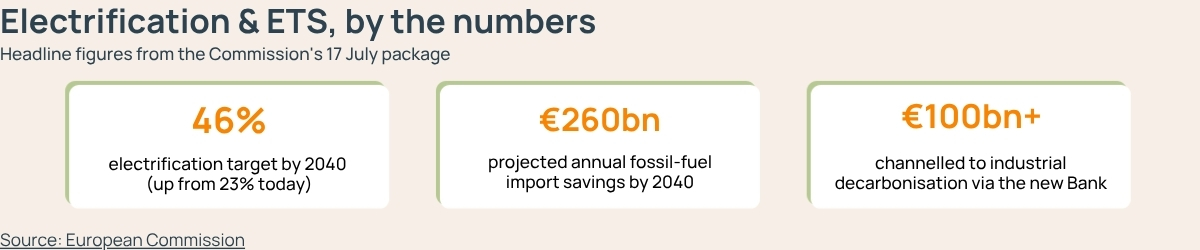
The Commission’s 17 July package pairs a long-term ambition with immediate relief for carbon-exposed industry: a softened ETS cap trajectory and extended free allocation through 2038 for CBAM sectors. For companies, the near-term signal is a longer runway on carbon costs and real funding for the electrification switch, but the proposals still have to clear Parliament and Council, so the final shape isn’t locked in yet.
Source: European Commission
Regulation and policy spotlight
Commission finalises EUDR product scope and IT system ahead of December application
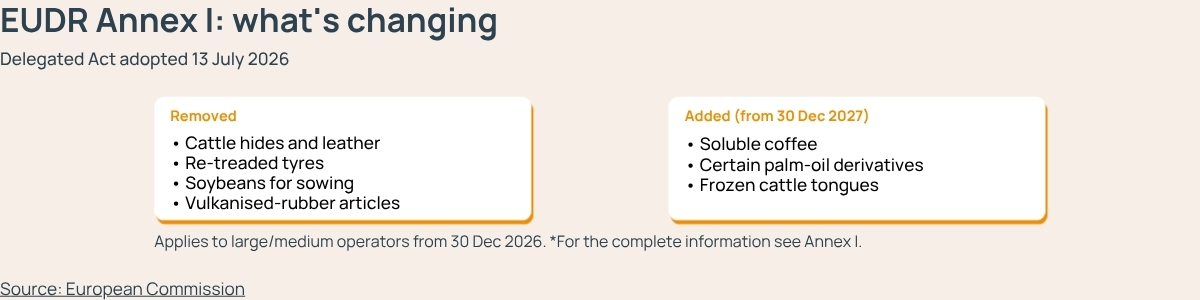
The 13 July Delegated and Implementing Acts complete the EUDR simplification package, and the Information System gets simplified declarations for micro and small operators. With the regulation applying to large and medium operators from 30 December 2026, the practical task now is mapping commodity codes against the revised annex before the reopened Information System’s end-of-July training sessions.
Source: European Commission
Parliament committee backs CBAM expansion to downstream products
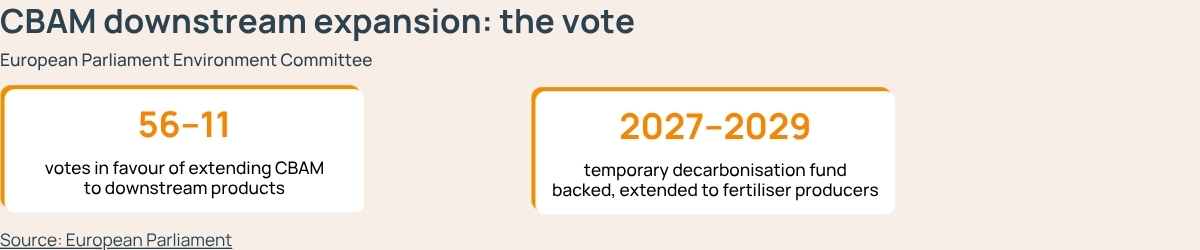
The vote extends CBAM well beyond basic materials into finished steel and aluminium goods like fasteners, wire, and household articles, while closing the online-imports loophole with a weight-based limit and removing the option to offset obligations with Article 6 carbon credits. Parliament adopts its full negotiating mandate in September, but importers of metal-intensive goods, even lightly processed ones, should start assessing exposure now rather than waiting for the final text.
Source: European Parliament
Standards, reporting and frameworks
Korea finalises ISSB-based disclosure roadmap, faster and broader than the draft
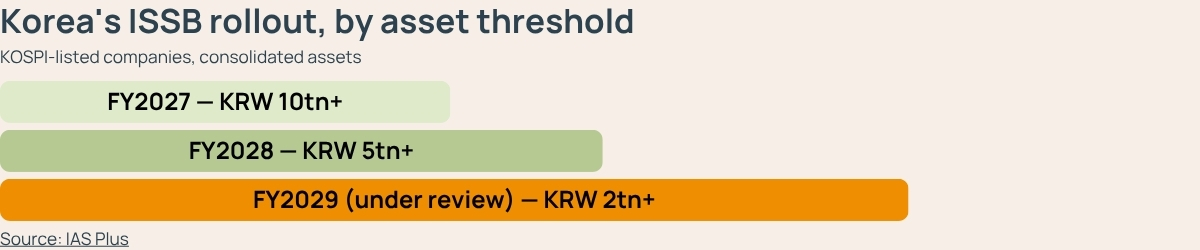
Transitional relief covers Scope 3, assurance, and a three-year penalty exemption (excluding greenwashing). The expansion is a pointed contrast to scope reductions underway in the EU and the US retreat from climate disclosure.
Source: IAS Plus
Bangladesh adopts IFRS S1 and S2, extending sustainability reporting to listed companies
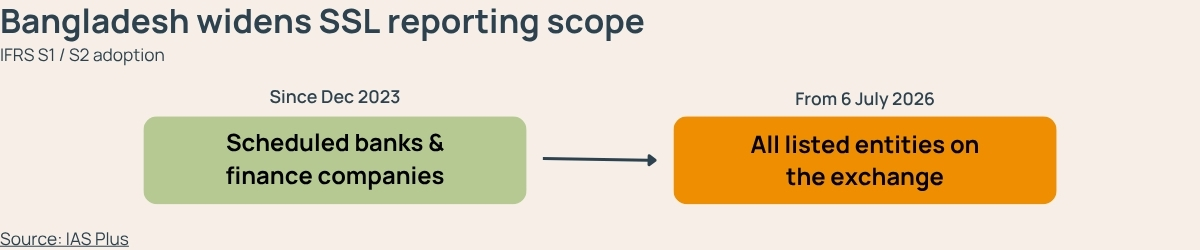
Bangladesh’s Financial Reporting Council has finalised the extension. Alongside Korea, it reinforces that ISSB adoption momentum in Asia is running counter to the deregulatory direction in Europe and the US, a divergence worth tracking for any company reporting across both regions.
Source: IAS Plus
Country and market spotlight
Brussels clears France’s €63 billion offshore wind programme

One of the largest clean-energy support packages cleared under EU state-aid rules, the approval signals continued willingness to wave through large national energy-transition subsidies even amid the wider deregulatory mood.
Source: ESG Today
Trends, research and insights
Microsoft’s emissions jump 25% as AI buildout meets cleaner accounting

The jump reflects a deliberate accounting shift: Microsoft stopped buying unbundled renewable energy certificates, which pushed Scope 2 into view rather than masking it. The company still grew its renewables portfolio and reaffirmed its 2030 carbon-negative goal. The lesson for practitioners: emissions can rise on paper precisely because the accounting gets more honest, and stakeholders will need help reading that difference correctly.
Source: ESG Today
Other News:
- EU financial supervisors propose Taxonomy reporting simplifications: ESMA, EBA and EIOPA propose cutting Taxonomy reporting burden, including limiting the OpEx KPI and redesigning insurers’ underwriting KPI. Consultations run to 12 August 2026. Source: ESG Today
- ECB starts applying a “climate factor” to bank collateral: The ECB’s climate factor now reduces collateral value for assets exposed to green-transition shocks, meaning transition-exposed bonds support less central-bank borrowing. Source: European Central Bank
- Canada consults on taxonomy, including a contested oil & gas “abatement” label: Canada’s draft taxonomy proposes an “abatement” label that could cover oil and gas decarbonisation investments, with guardrails not defined until 2027, making this one of the most closely watched taxonomy debates globally. Source: ESG Today
- Last call: ISSB’s SASB sector-standard consultation closes 24 July: Amendments to the Agricultural Products, Meat/Poultry/Dairy, and Electric Utilities SASB standards close for comment 24 July 2026. Source: ESG Today
- TenneT prices the largest corporate European Green Bond to date: TenneT Germany’s €3.5 billion debut issuance, the largest yet aligned with the EU Green Bond Standard, was over six times oversubscribed and funds a €67 billion grid programme to 2030. Source: ESG Today