

Top story
EC proposes CBAM expansion to 180 downstream products

CBAM’s scope is moving in one direction: wider, and faster than many importers have planned for. The Council’s position goes beyond the Commission’s original steel and aluminium focus, pulling in a broader set of metal-intensive goods. Annual scope reviews mean compliance planning can no longer be a one-time exercise; it needs to become a recurring part of procurement and supply chain risk assessment. Companies importing metal-intensive components, even indirectly through assembled goods, should start mapping exposure now, well ahead of the Parliament-Council trilogue locking in the final list.
Source: Press release Council of the EU
Regulation and policy spotlight
EU latest guidance on the PPWR
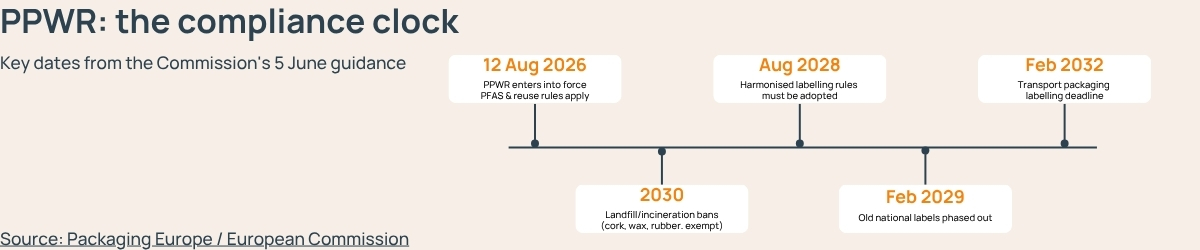
Compliance deadlines for the PPWR are no longer abstract. The Commission’s 5 June guidance turns several open questions into fixed operational requirements. Food-contact packaging manufacturers now have a hard PFAS threshold to design against, hospitality and retail businesses have a 10% reusable beverage packaging target to hit, and transport packaging placed on the market as early as February 2025 already has a labelling clock running toward the timeline shown above. Companies still treating PPWR as a “future regulation” have less runway than they think.
Source: Packaging Europe
EFRAG reveals first details of reporting standards for non-European companies
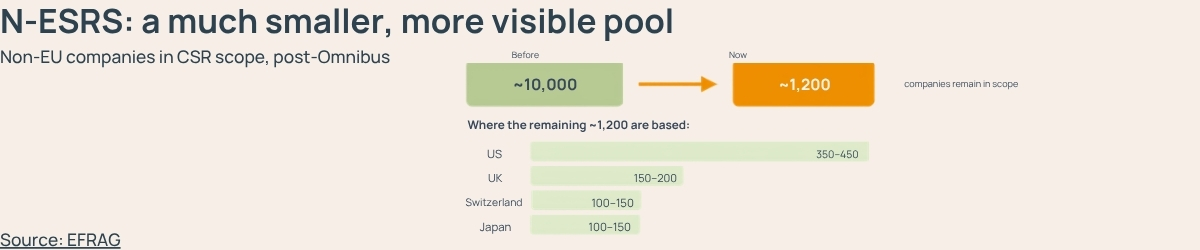
The scope reduction in CSRD looks like a compliance relief story. For the remaining group, it’s the opposite: a smaller, more visible pool of companies now carries a disproportionate share of scrutiny from investors and regulators watching how the N-ESRS approach settles. Which of the three proposed models EFRAG lands on (global, mixed, or voluntary full ESRS) will materially change the reporting burden for the US, UK, Swiss, and Japanese parent companies shown above. Worth flagging to any non-EU group entity now, before the July consultation closes the window to weigh in.
Source: EFRAG
Standards, reporting and frameworks
SBTi releases Corporate Net-Zero Standard V2.0

SBTi’s shift from validator to implementation partner signals where the real scrutiny is heading: not whether a target was set, but whether it’s being met. The “best efforts” assessment model, paired with a mandatory disclosure requirement when progress stalls, means vague or stalled net-zero commitments will become visibly stalled, in a system that used to reward target-setting alone. Companies with existing SBTi targets should assume their next progress report is being read more closely than the target itself was.
Source: SBTi
To know more:
- ILO Adopts Landmark Treaty on Gig Work: Convention 193 extends fundamental rights, including collective bargaining, safety protections, and algorithmic transparency, to platform workers regardless of employment classification, sidestepping the gig-work classification debate entirely. Source: ILO
- Annual stock take survey on Nature: TNFD’s second annual stocktake survey gauges market progress on nature-related disclosures, a low-cost way for asset owners and managers to help shape expectations before they harden into requirements. Submissions due 14 August. Source: TNFD
